Overview
Key Features
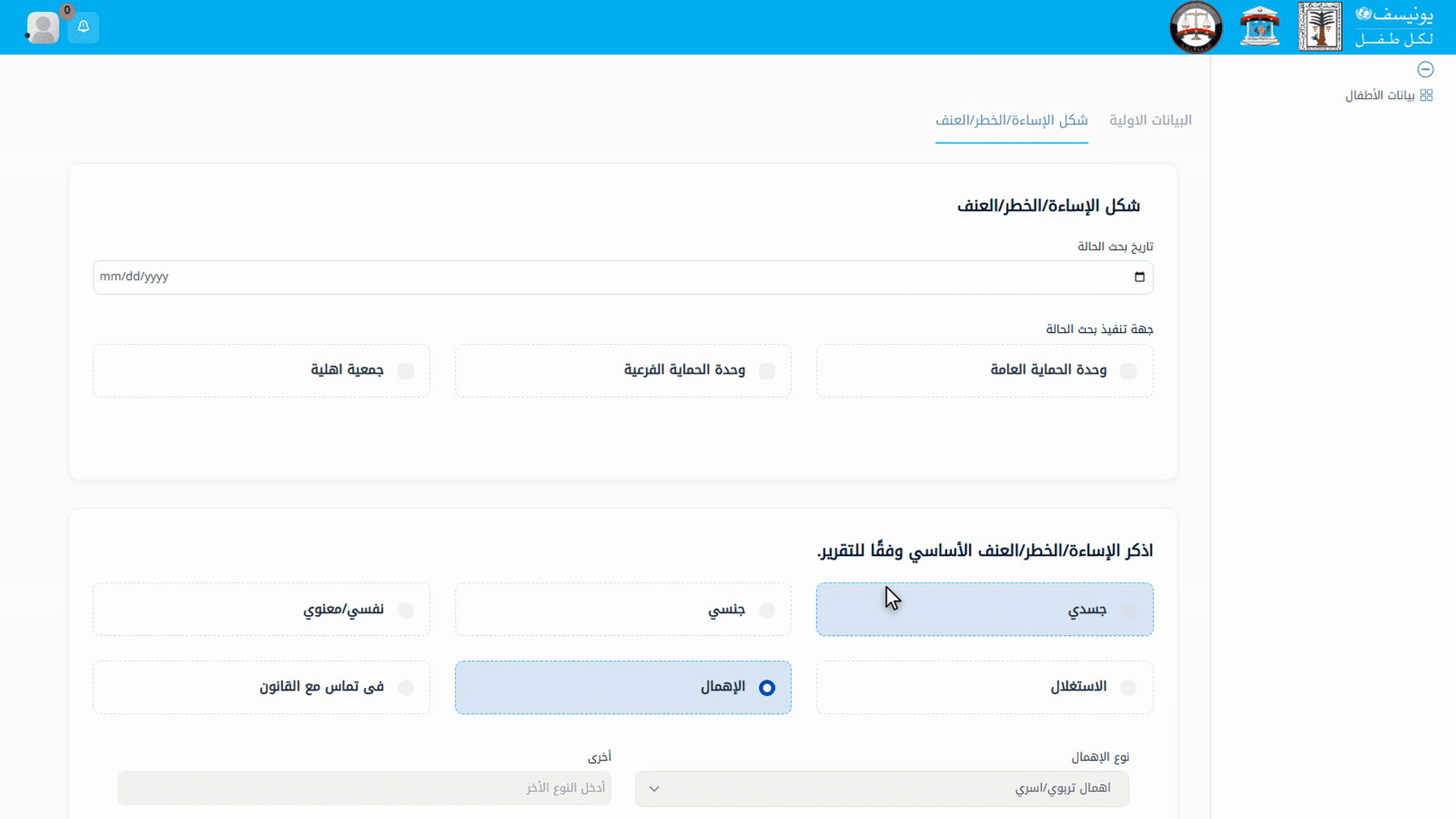
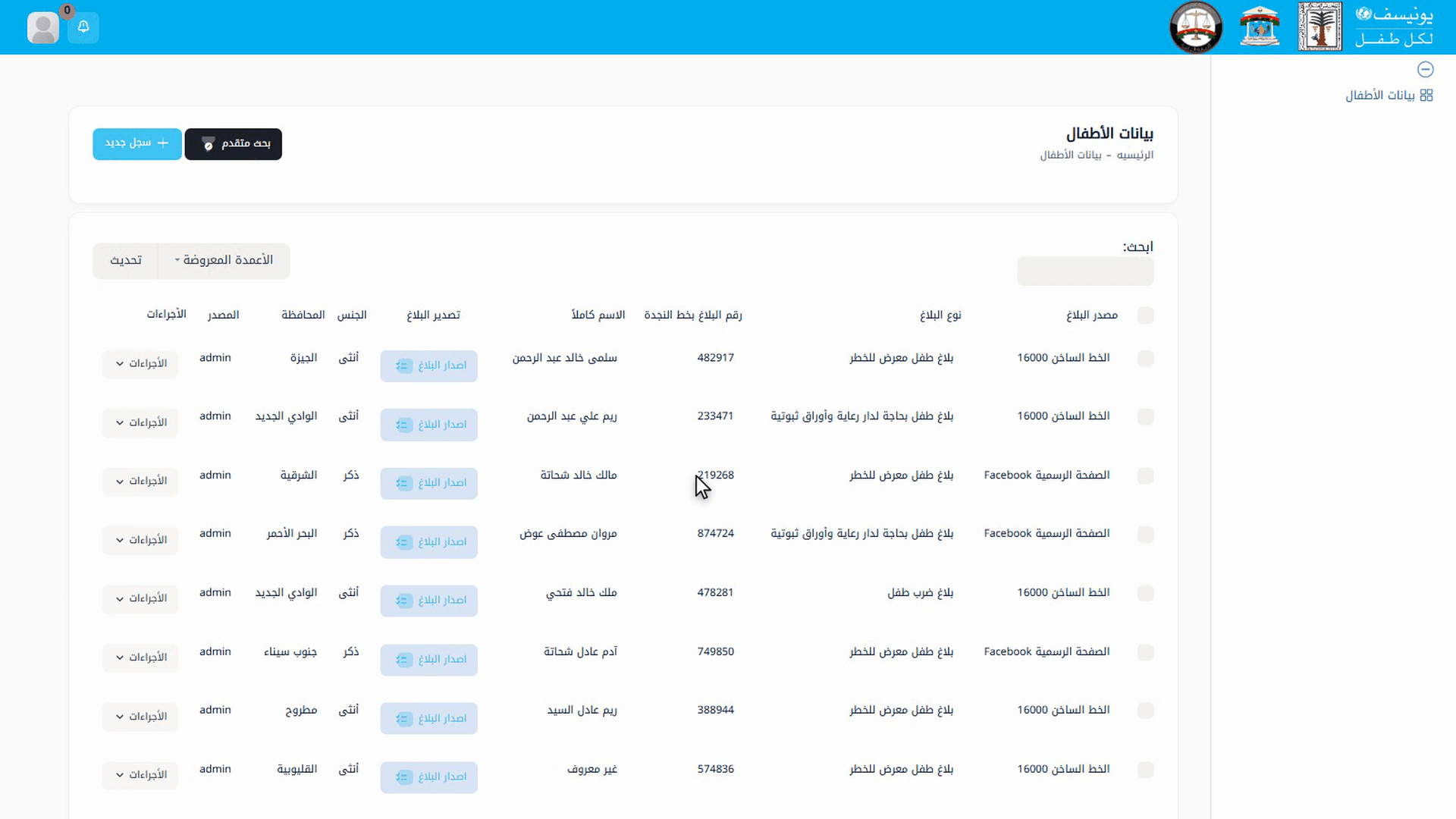
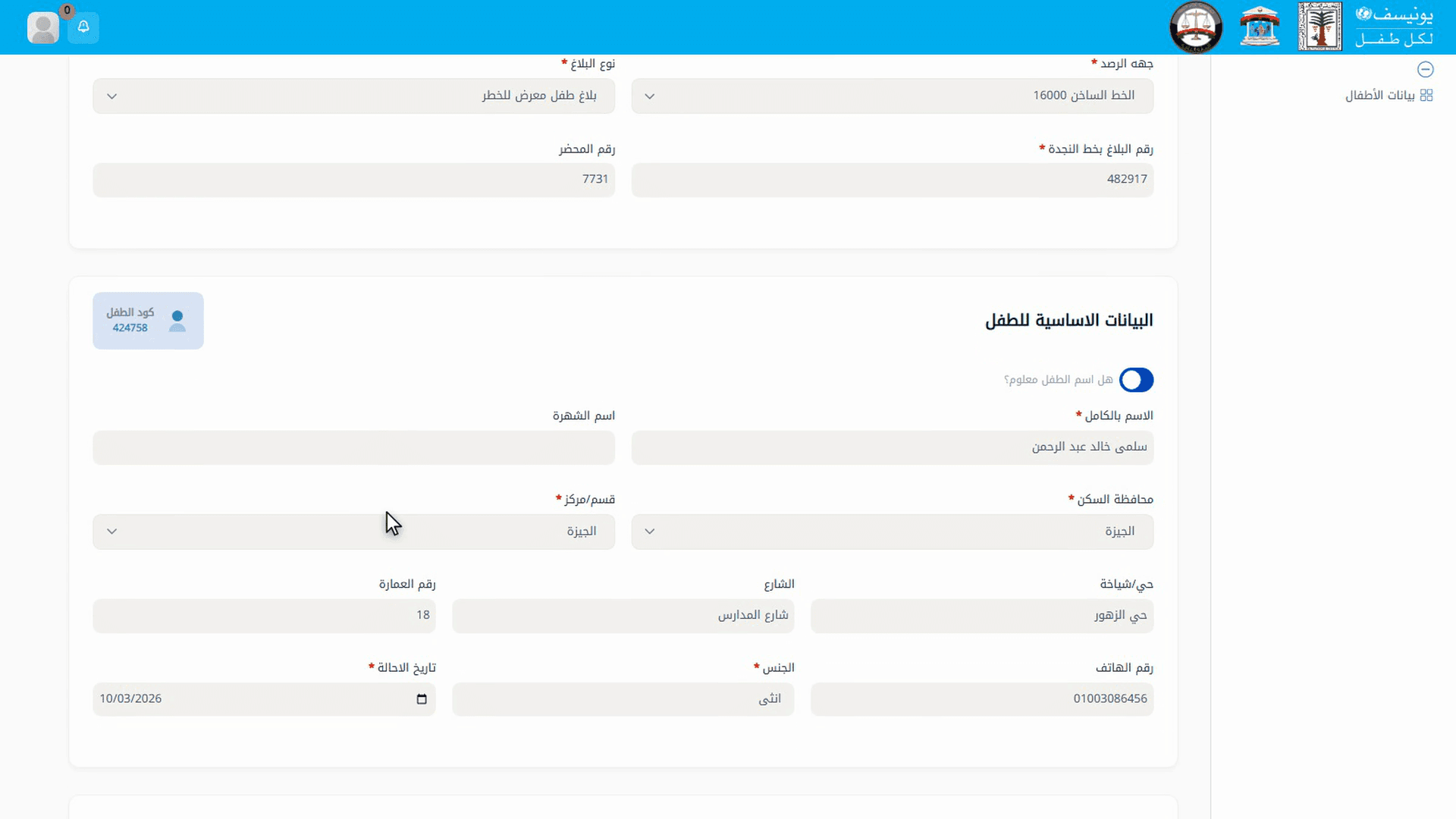
- Structured intake: One form for every report: source, child, address, age, and the harm classified into six categories, each with its own sub-types, instead of free text.
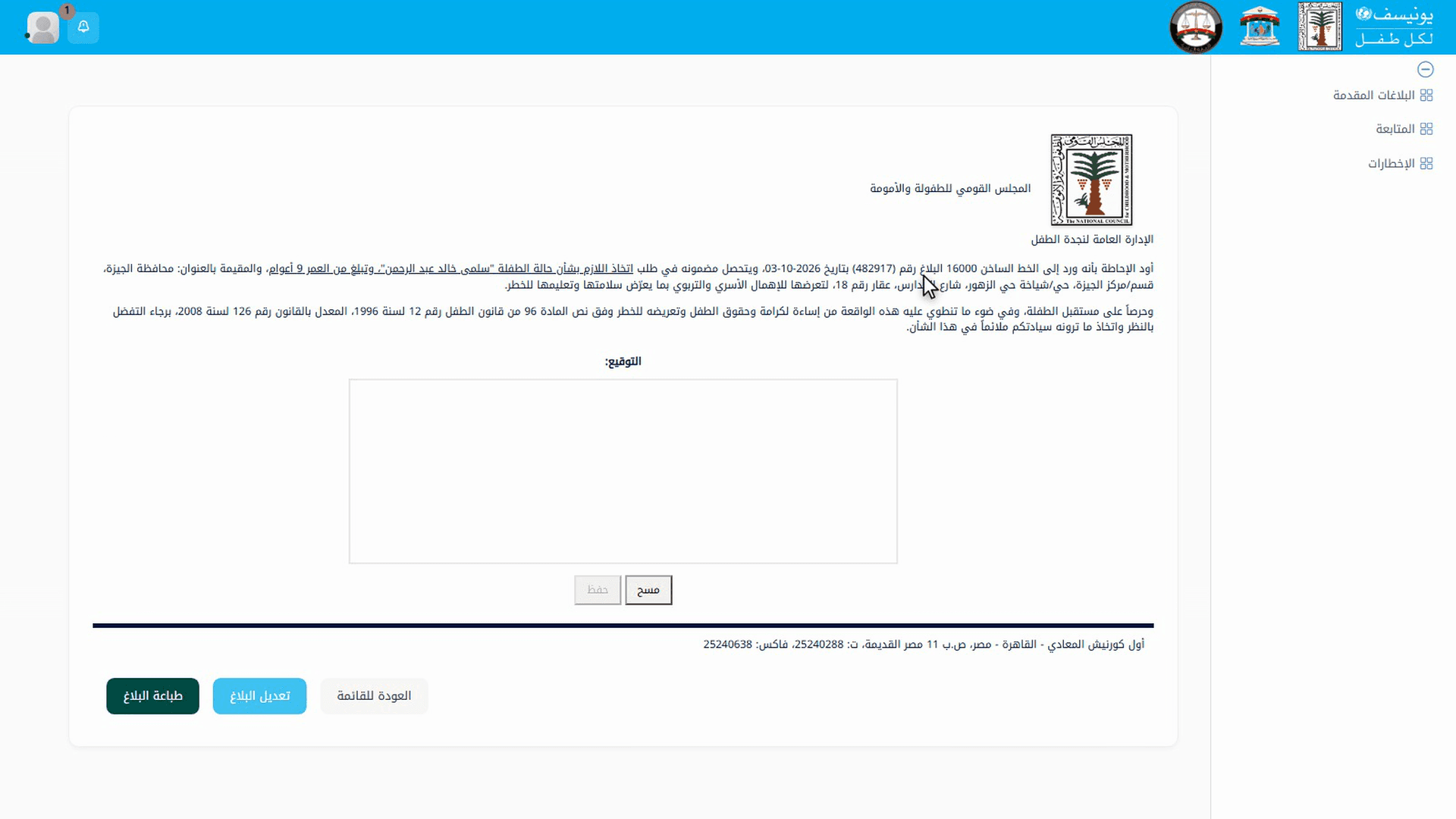
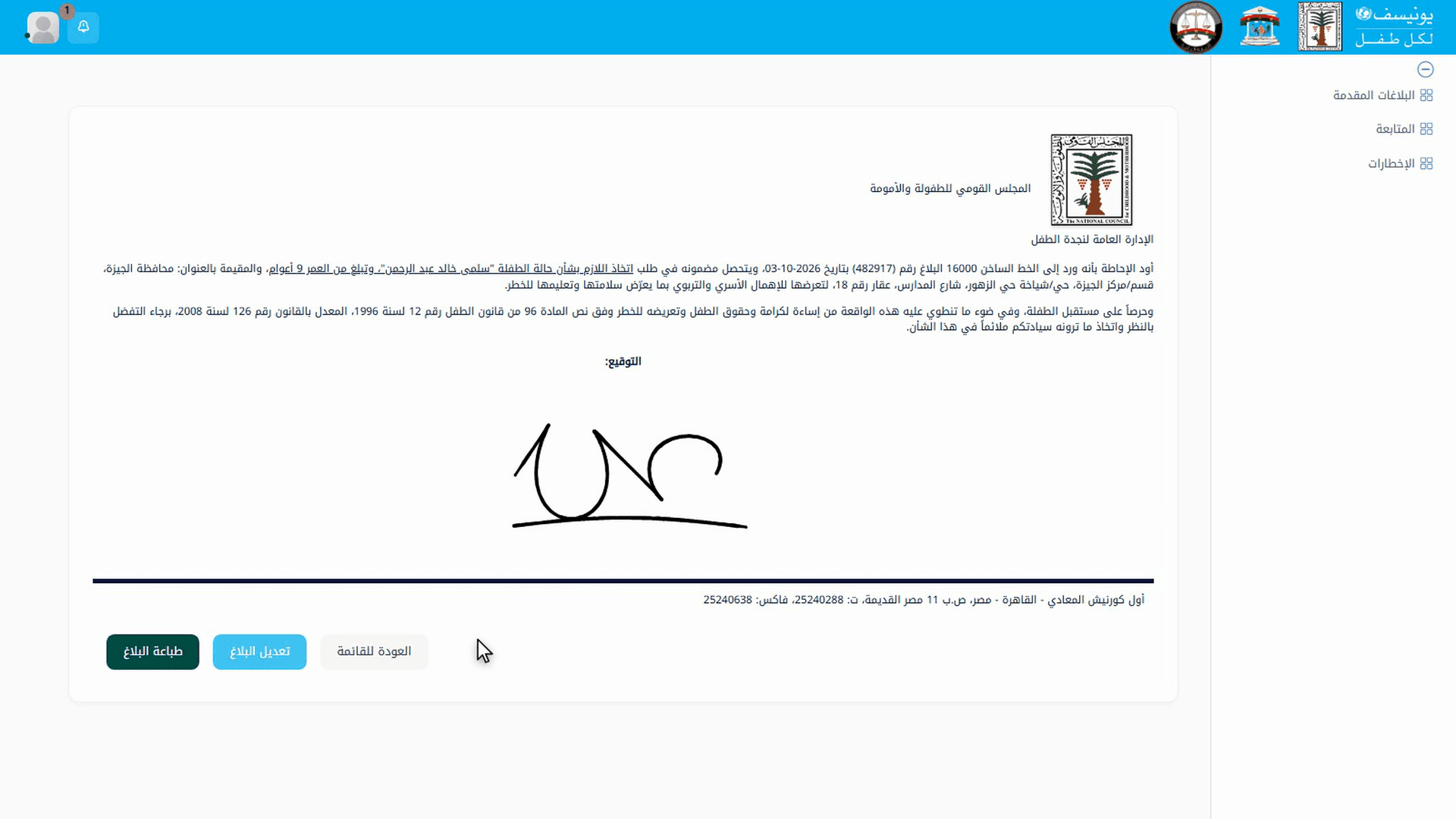
- Generated official letters: Each report type has a letter template with placeholders. When a report is issued, the system writes the letter to the prosecution from the form's data.
- On-screen signature: The helpline's director signs the letter in the browser, attaches the signed PDF, and sends the report to the Public Prosecution.
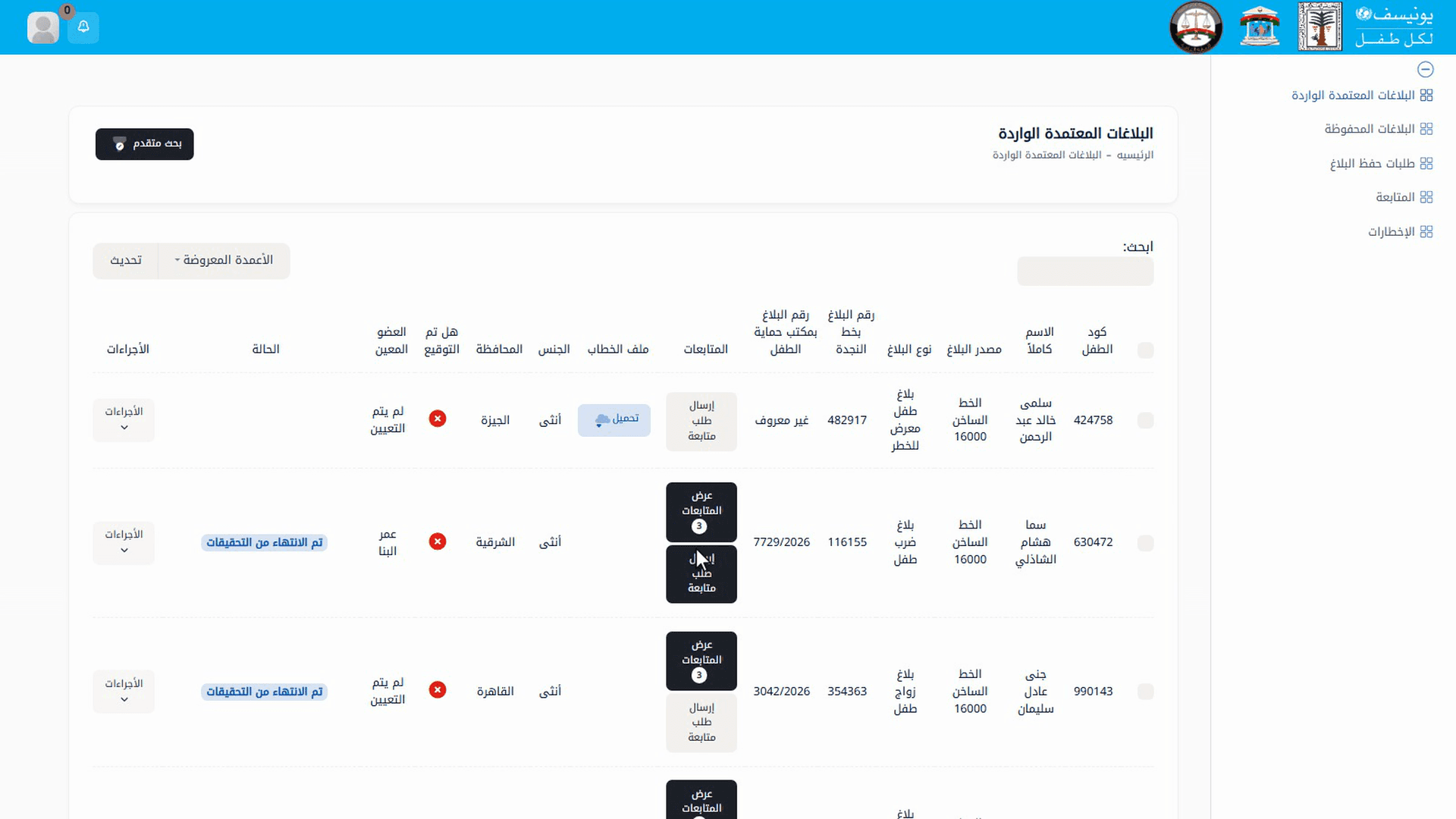
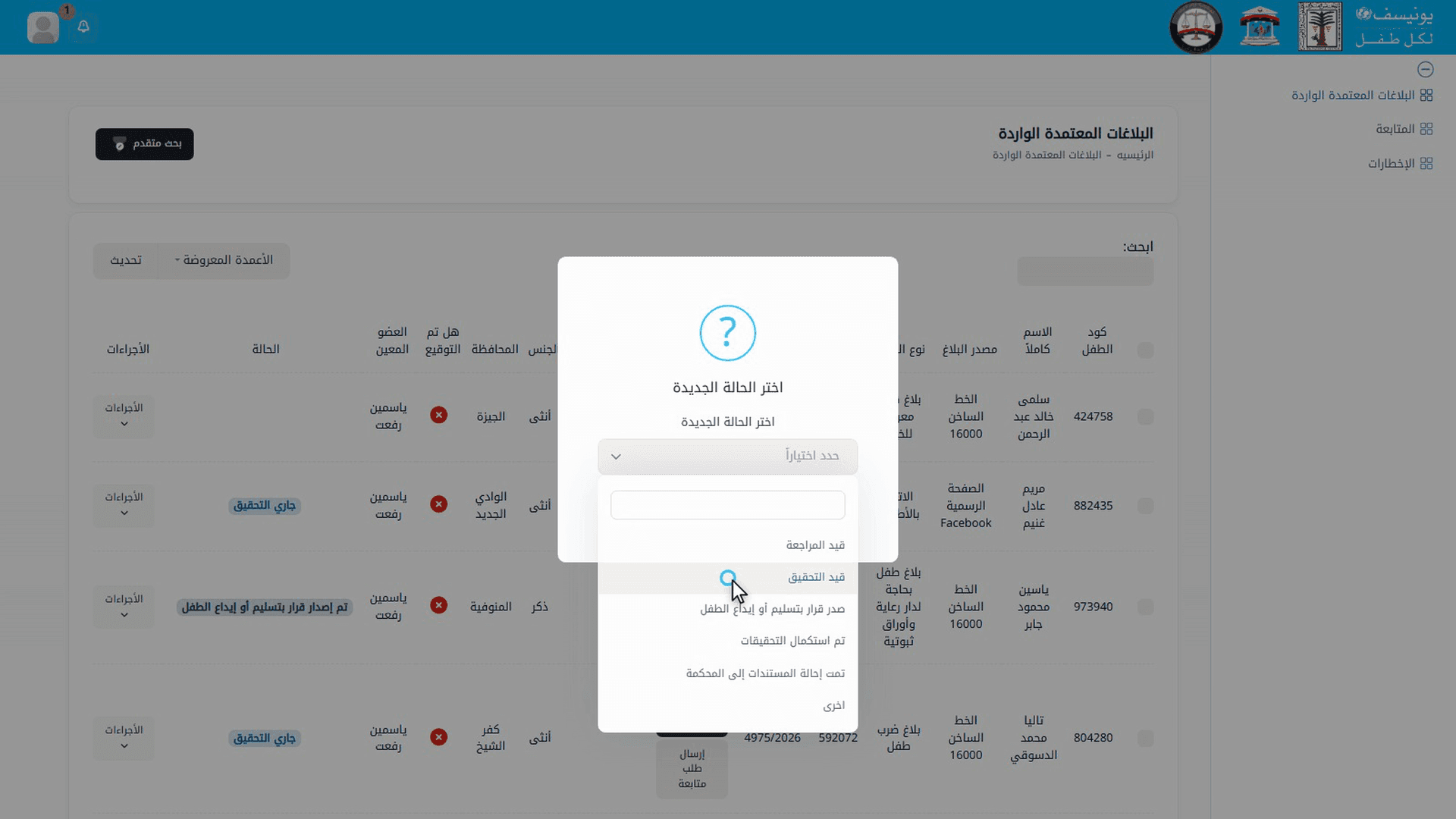
- Assignment and status: The head of the Child Protection Office assigns each report to a member, who sees only the reports assigned to them and keeps the investigation status up to date.
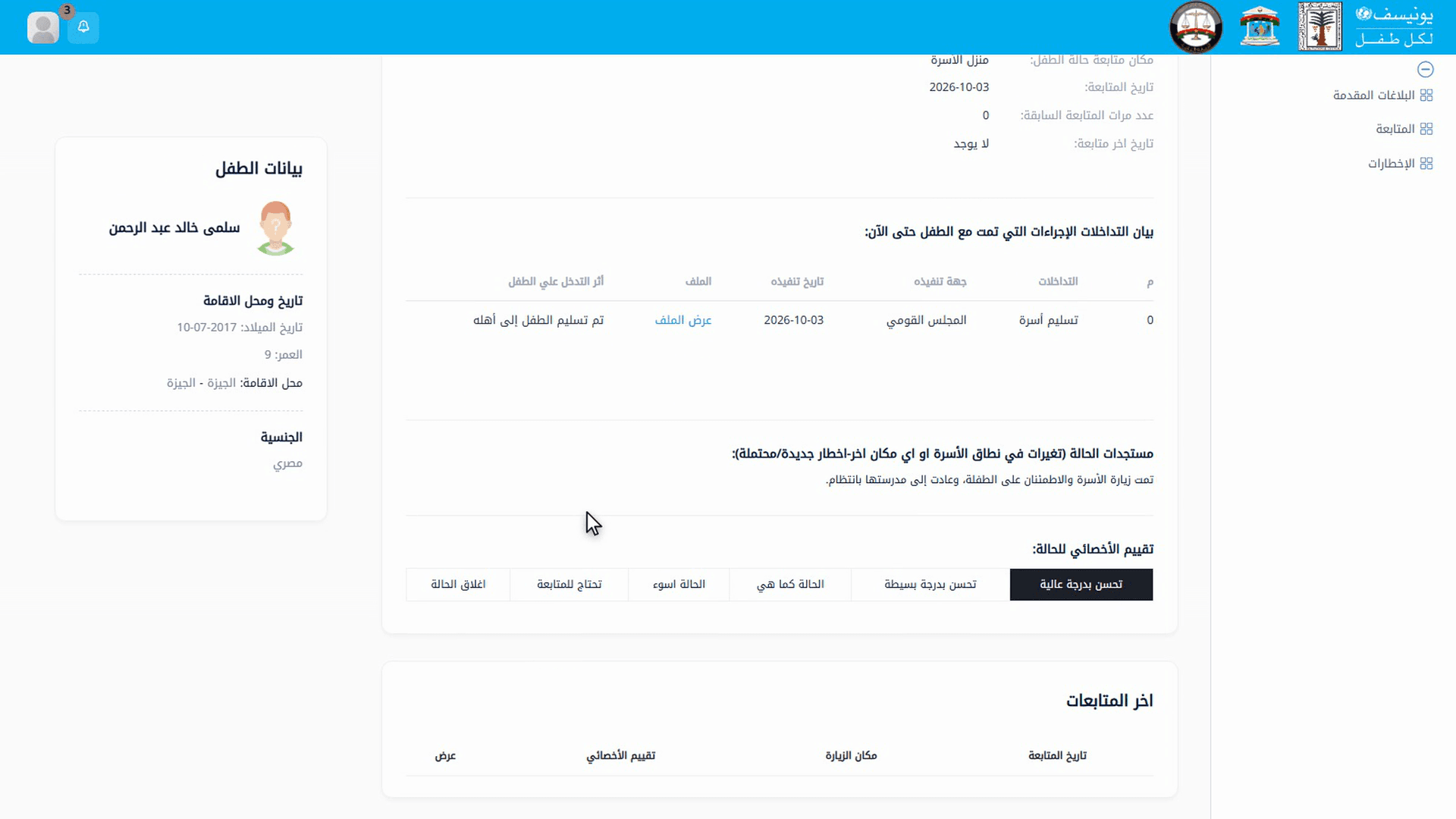
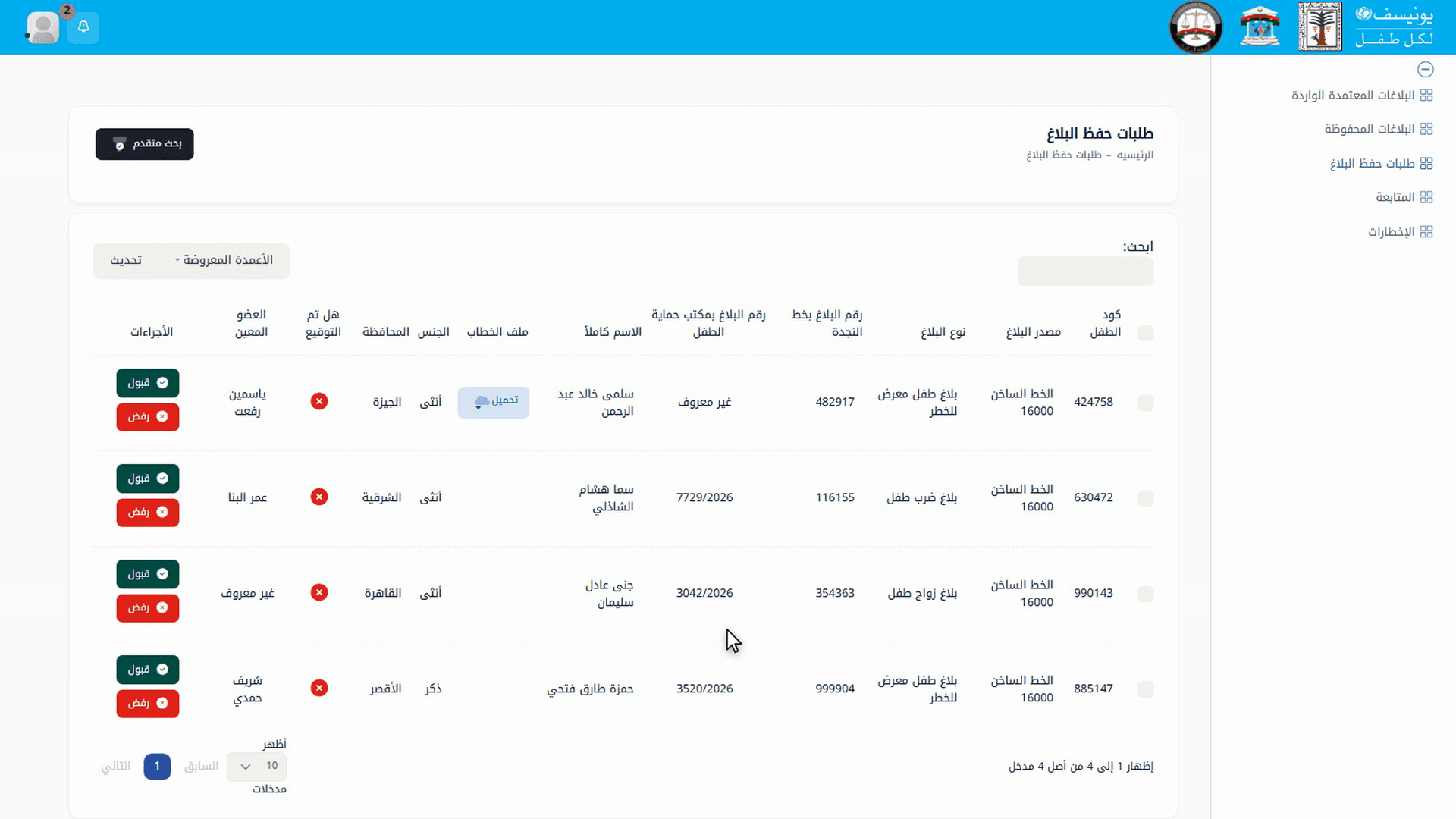
- Follow-up loop: A prosecutor can ask the helpline for a follow-up. The helpline records each intervention, who carried it out, when and to what effect, with a case update and the specialist's rating.
- Controlled closure: A member requests closure and the head of the office approves it. A report with an open follow-up cannot be closed.
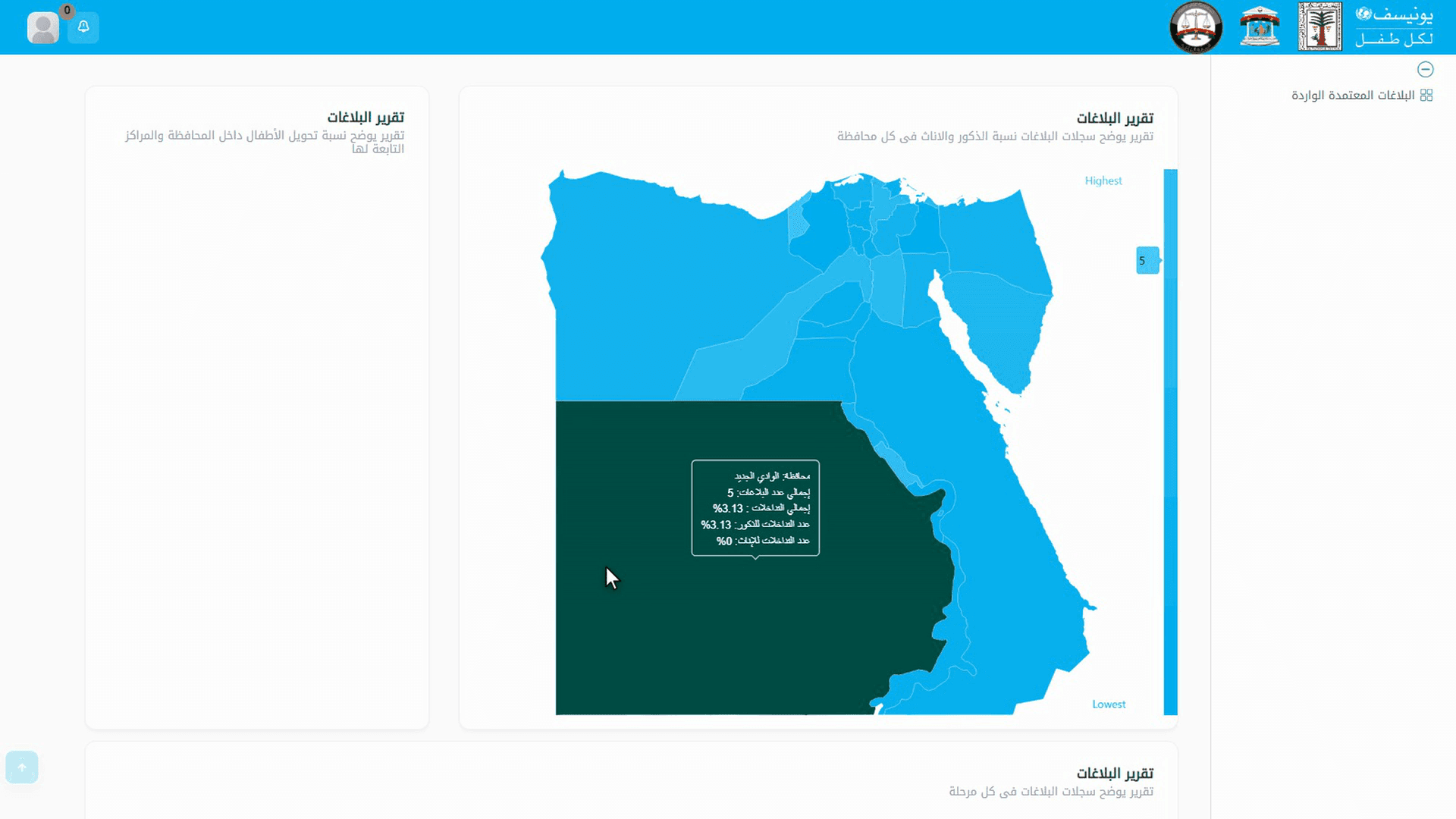
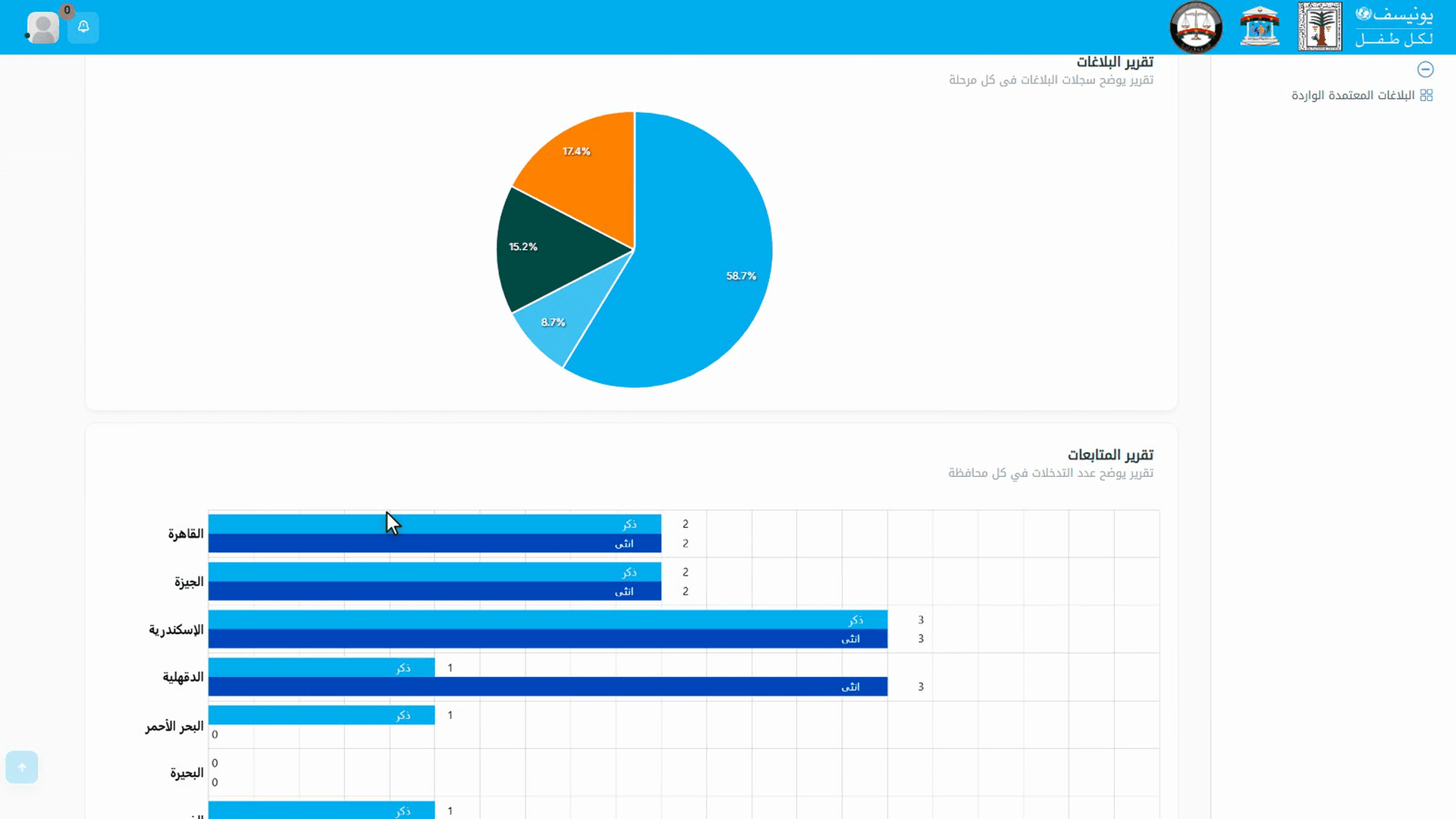
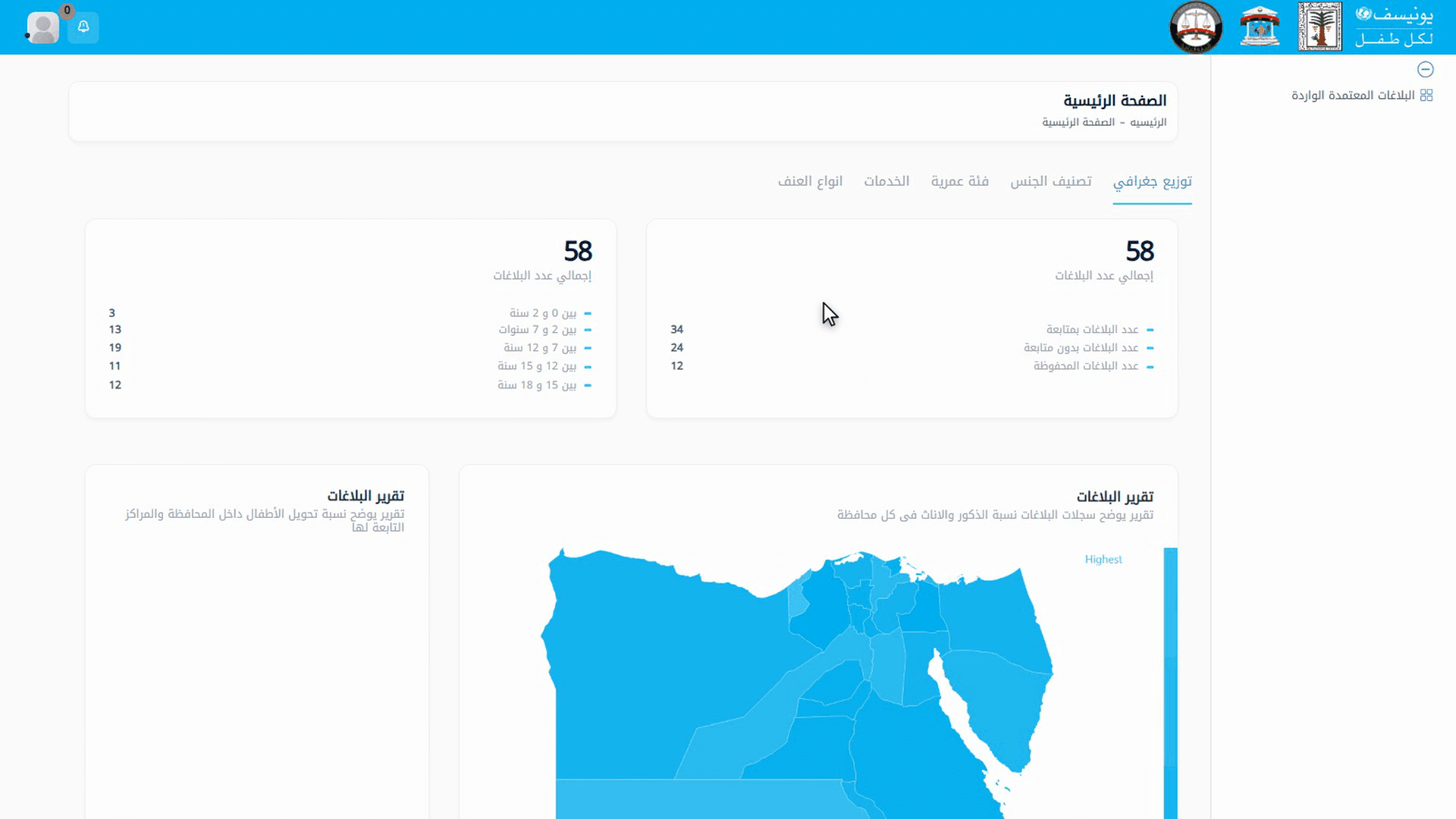
- National dashboard: Totals by governorate on a map, by gender, age group, service and type of harm, with date and place filters.
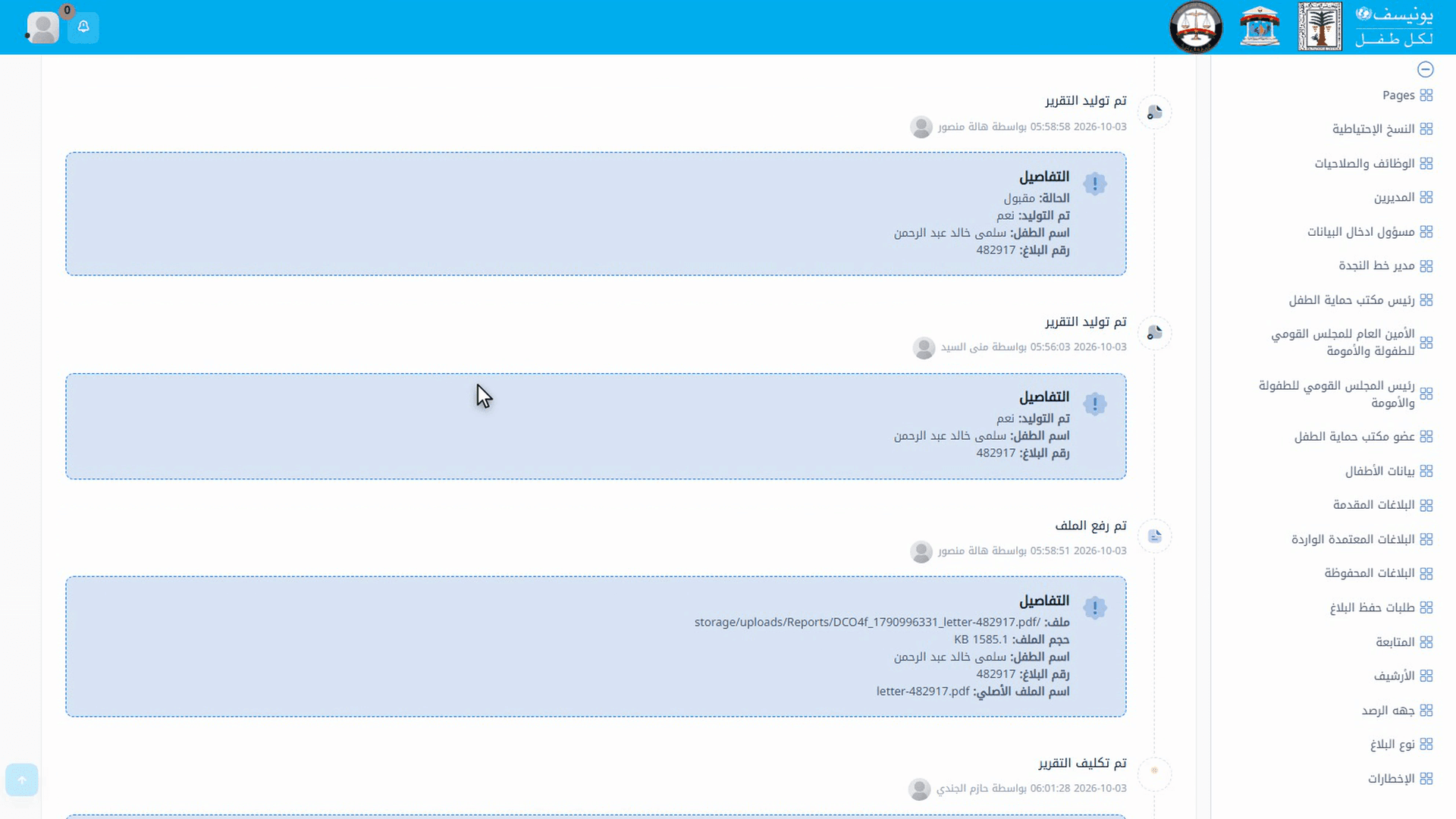
- Audit trail: Every action on a report is recorded with who did it and when, and shown as a timeline per report.
- Roles and permissions: Seven roles, with pages, routes and permissions stored in the database and editable from the admin screens.
- Account security: One-time passwords by email, forced password changes, progressive lockout on failed sign-ins, and automatic suspension of inactive accounts.