Overview
Key Features
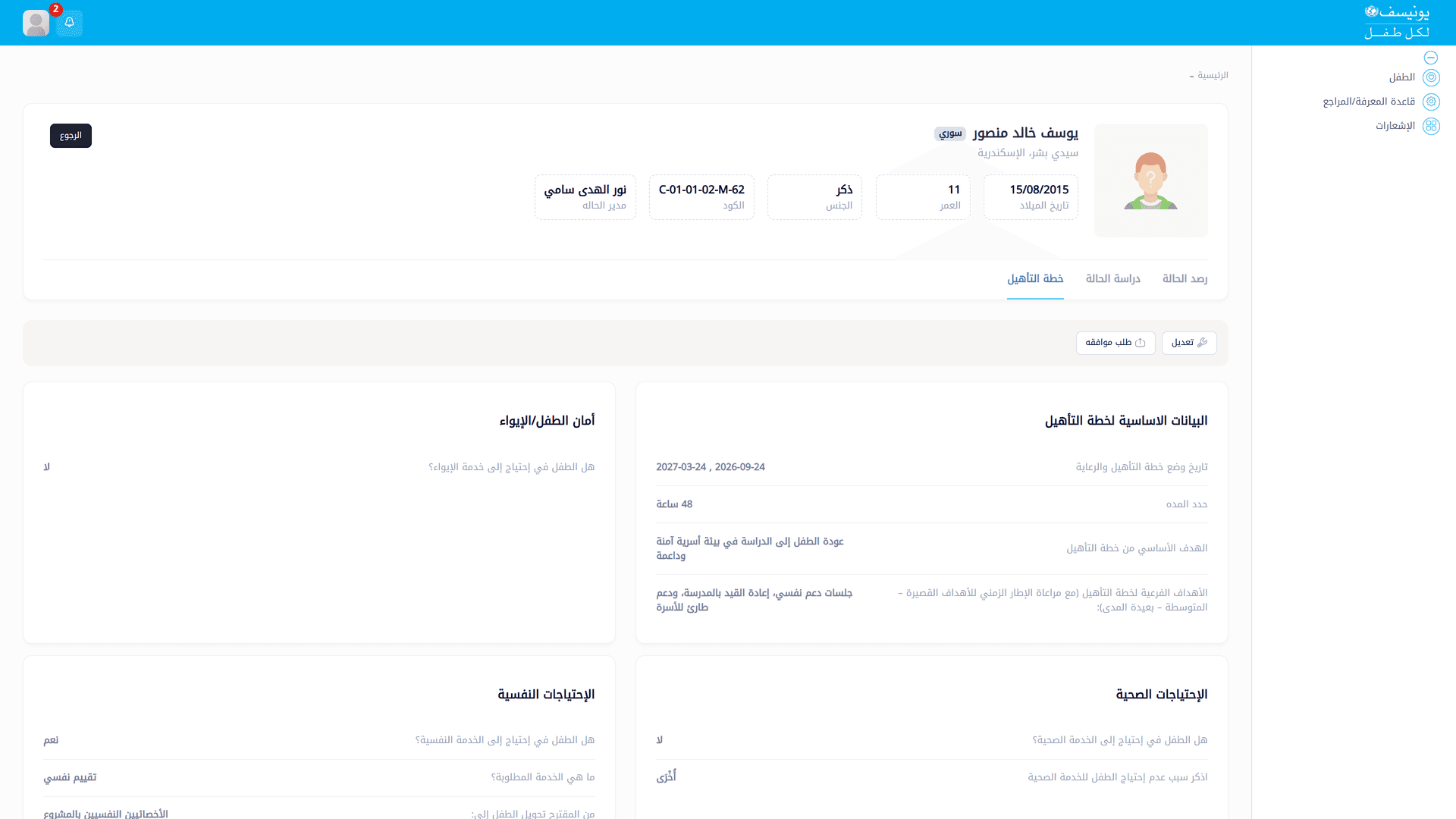
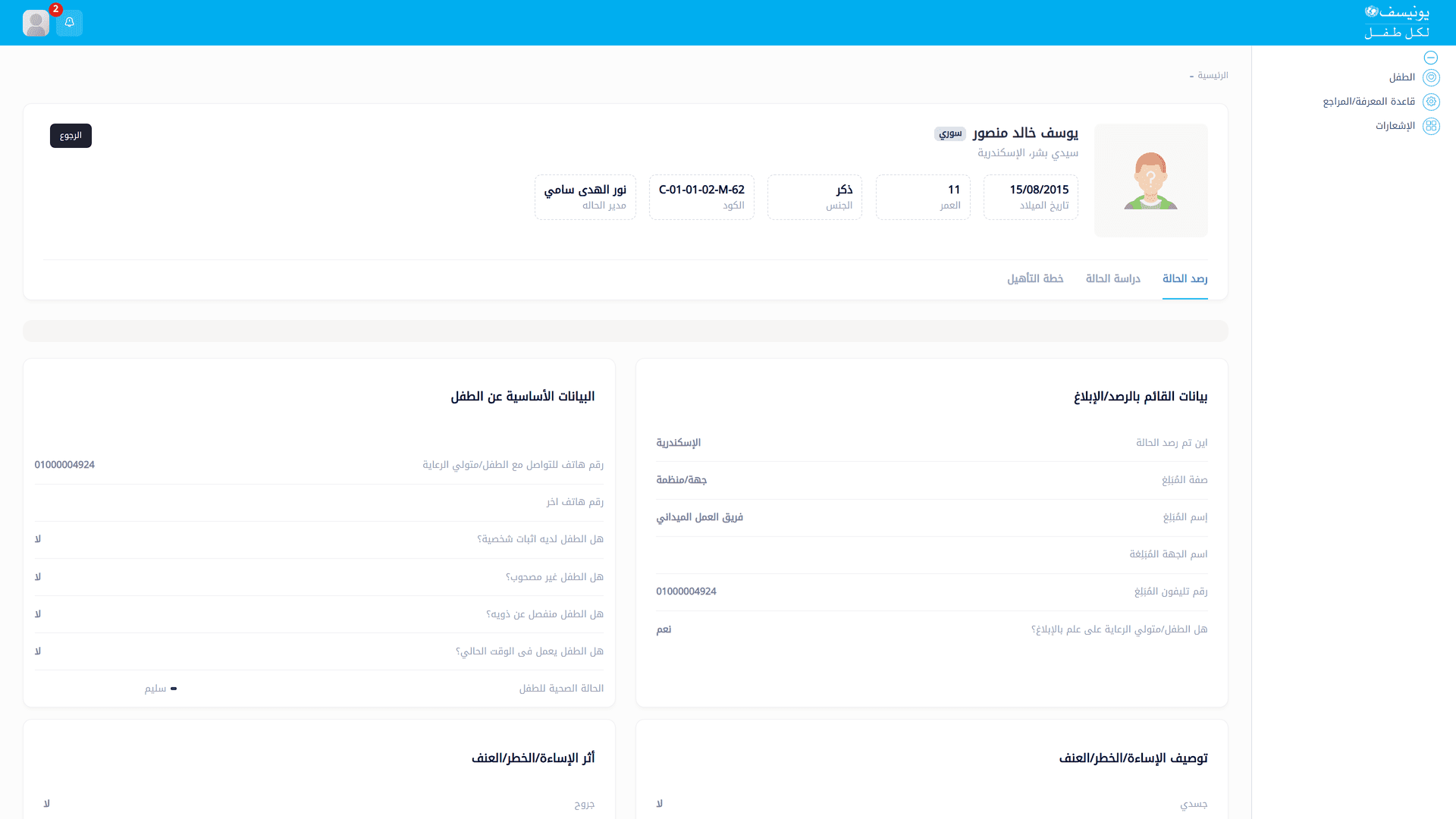
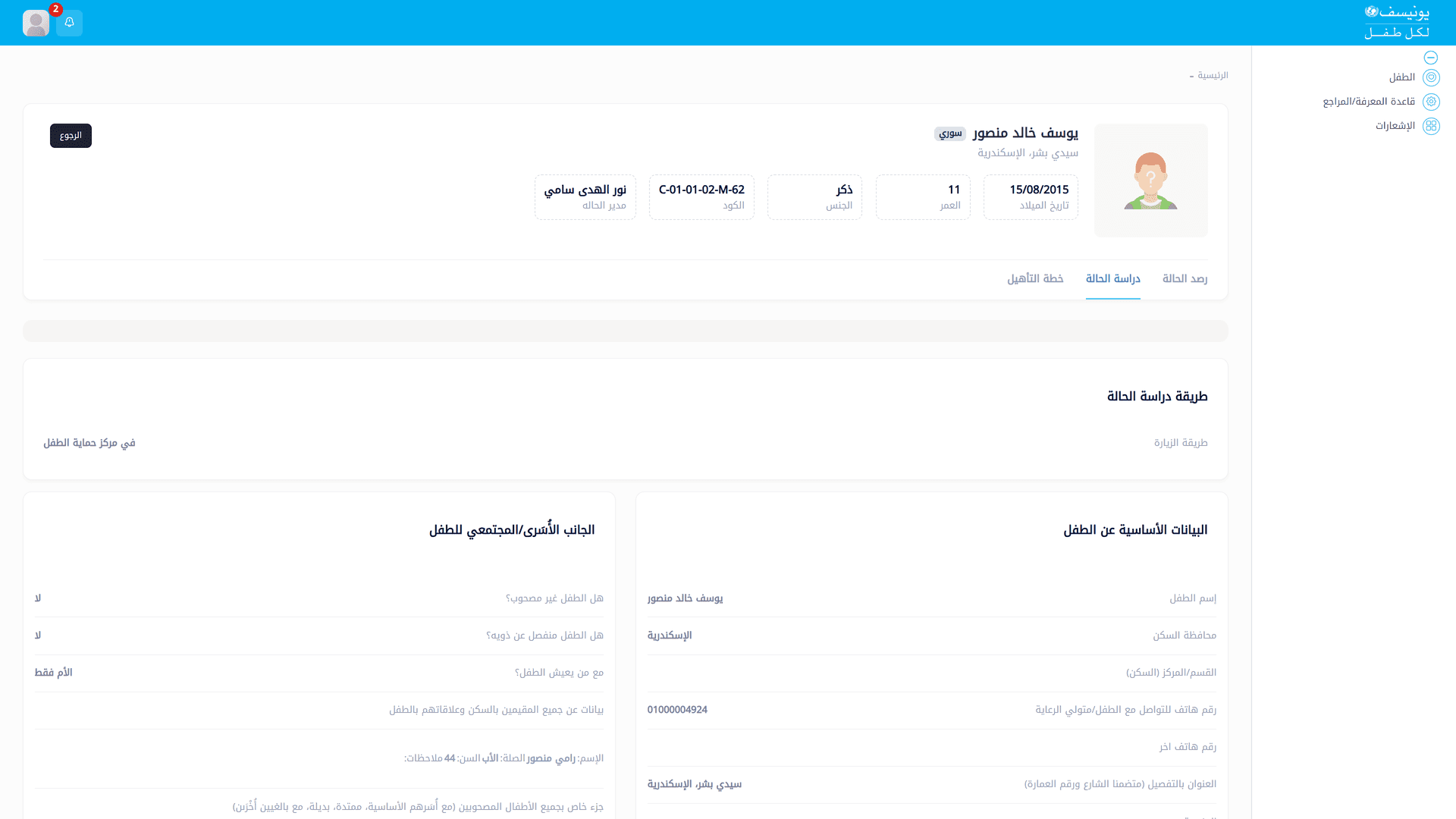
- Gated case file: Six stages per case, each with its own request, approve and reject actions. The next stage's tab appears only once the previous one is approved, and every decision notifies the other side.
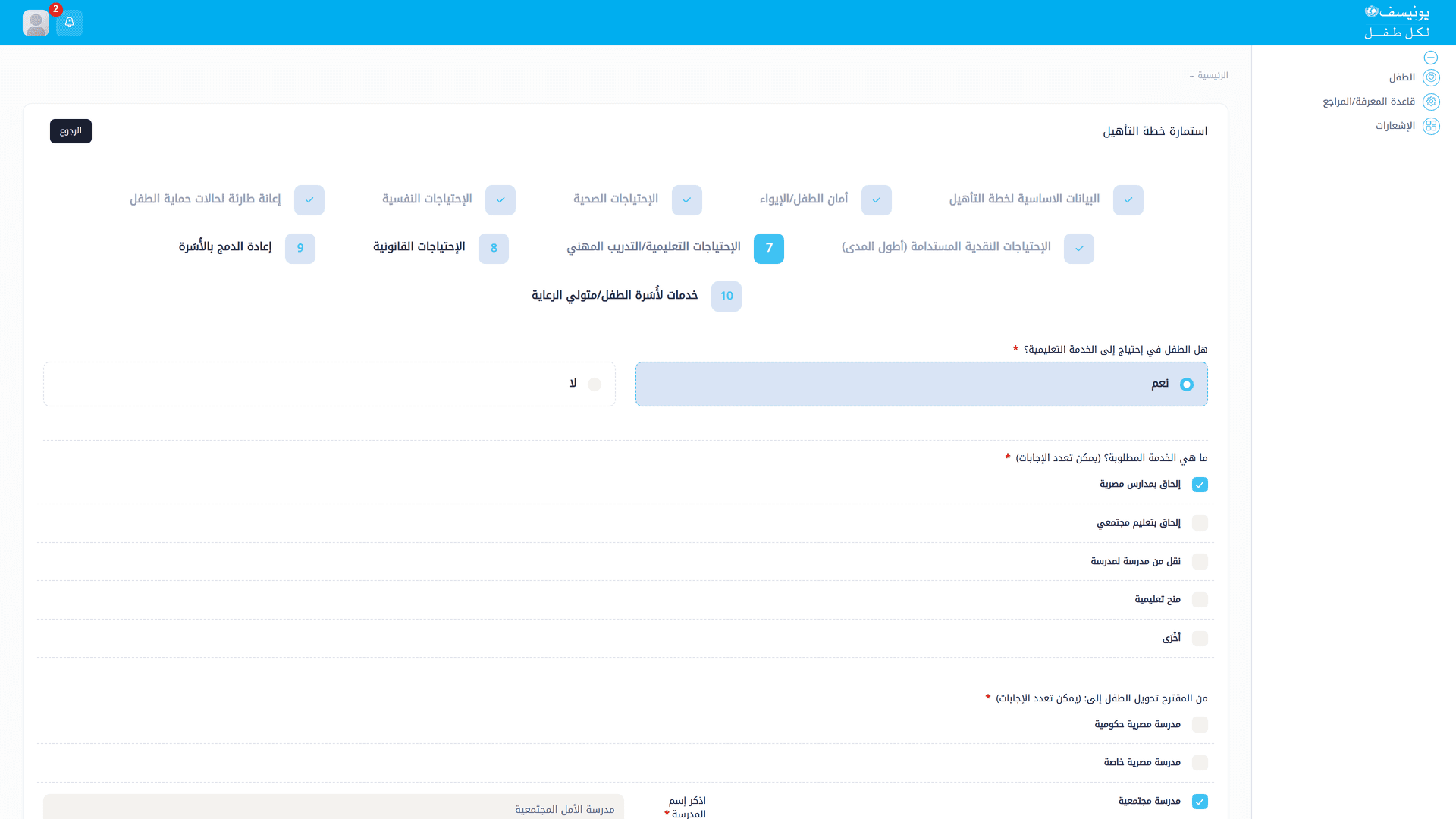
- Long forms as wizards: A nine-step case study and a ten-step rehabilitation plan, covering family, schooling, work, health, legal status and risk, with one plan step per service type.
- Nine service types: Shelter, health, psychological, emergency aid, cash support, education, legal, family reintegration and services for the family, each with a provider, a target date and a delivery record.
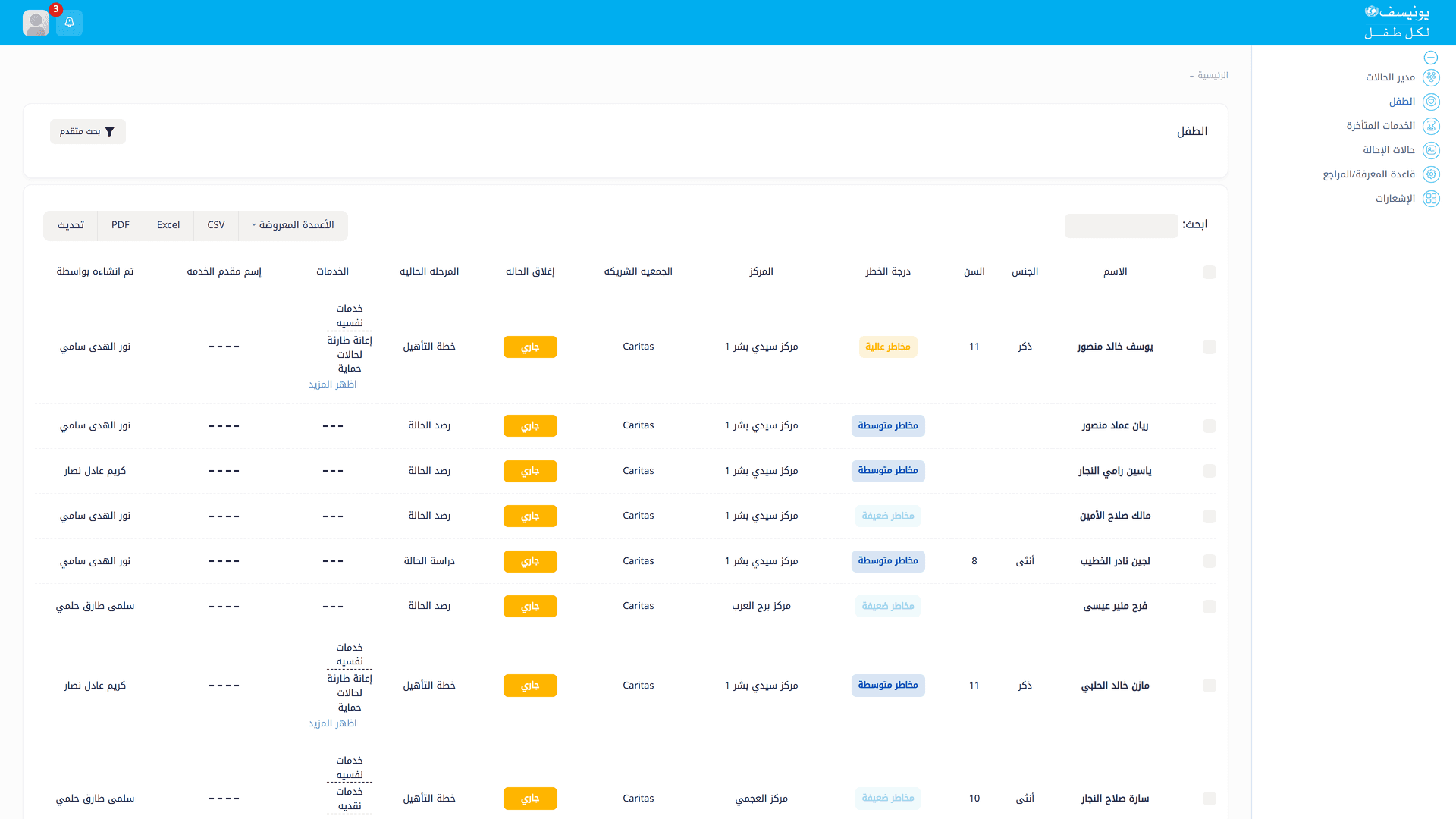
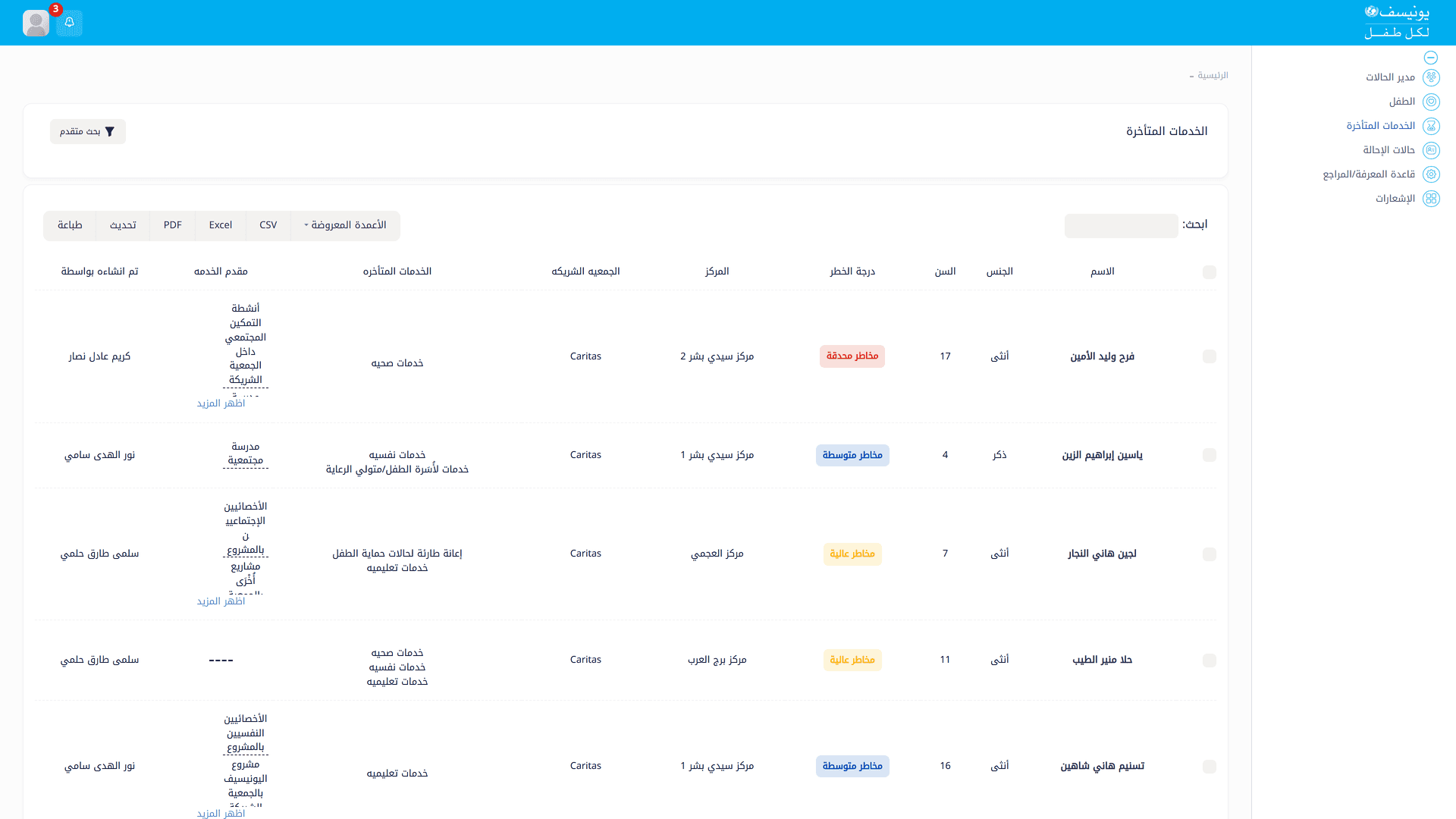
- Overdue services: A watchlist of services that were planned, are past their date and have not been delivered, across every centre.
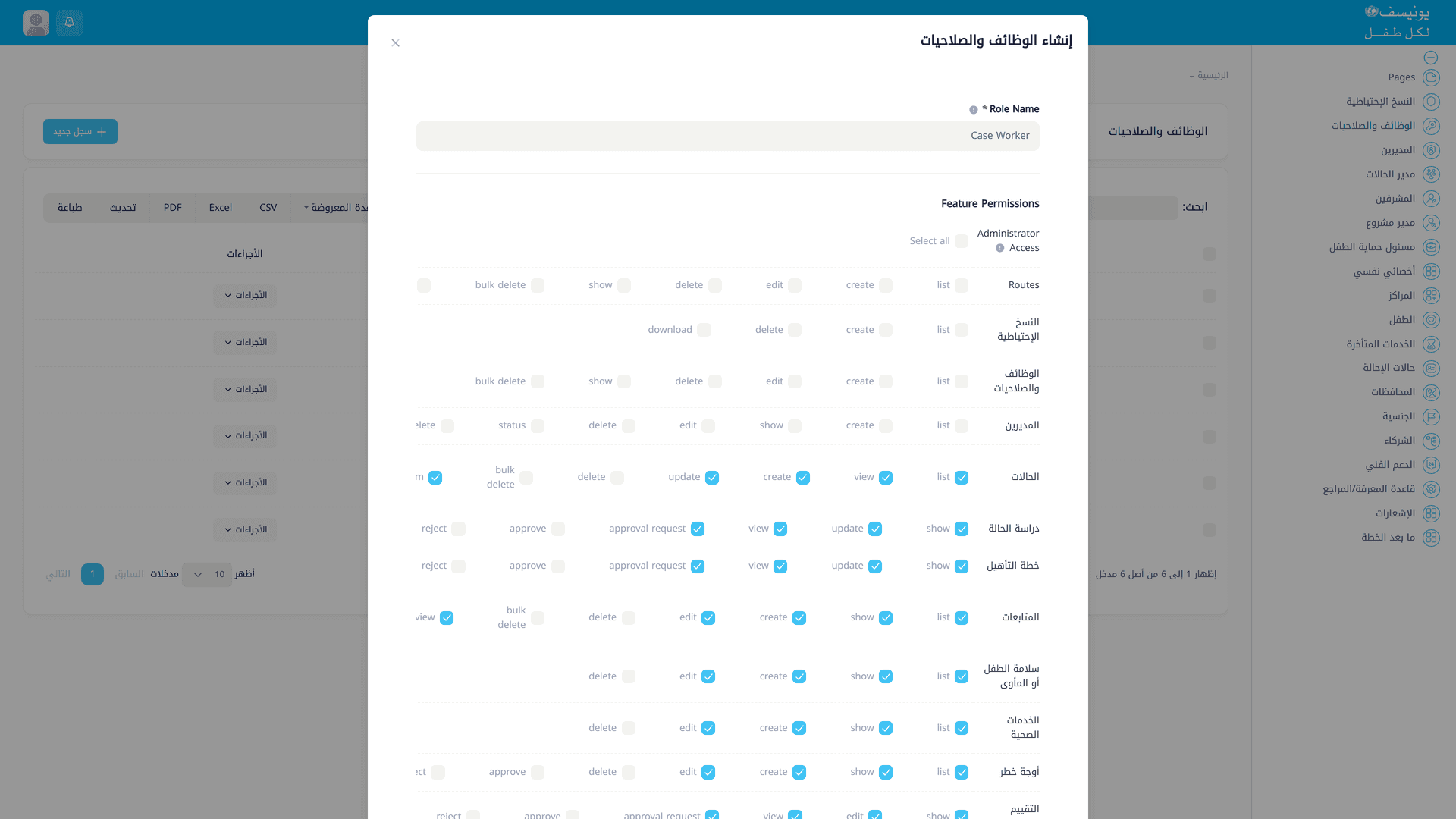
- Role-scoped access: Six roles, from case worker to administrator. A case worker sees only the children assigned to them, a supervisor the centres they cover, a project admin their partner organisation.
- Database-driven permissions: Pages, routes and permissions are rows in the database, edited from a permission matrix per role rather than in code.
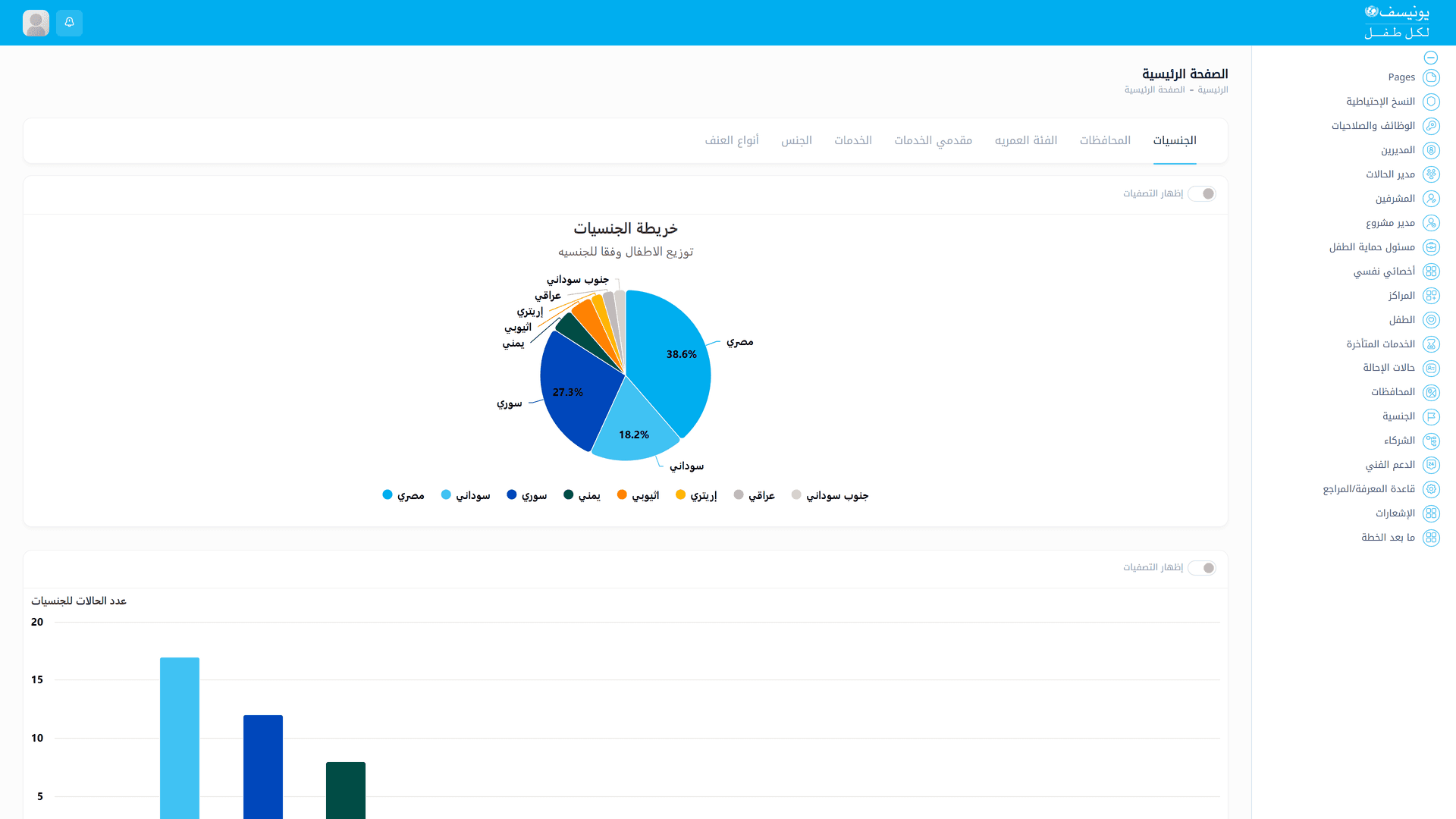
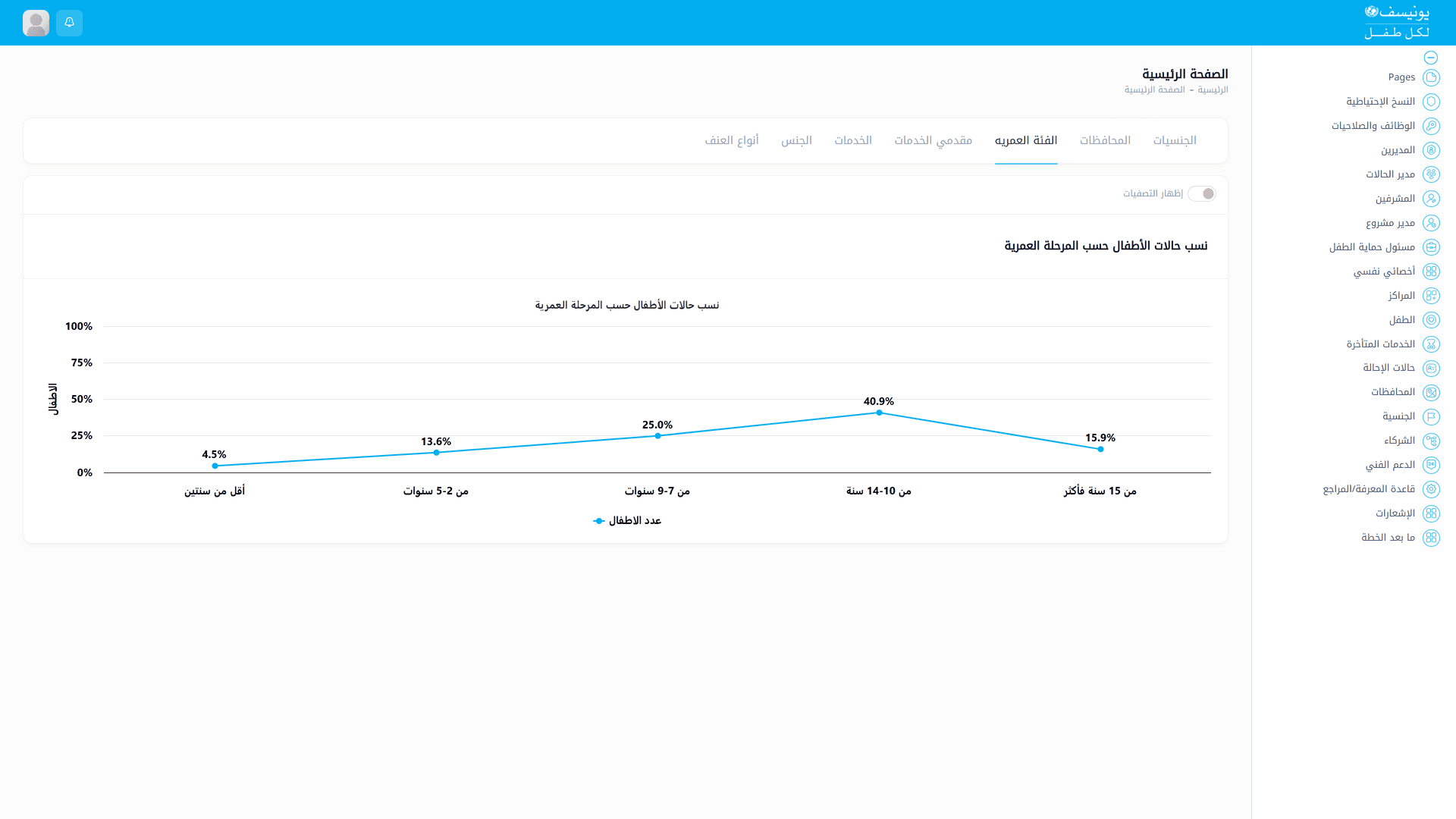
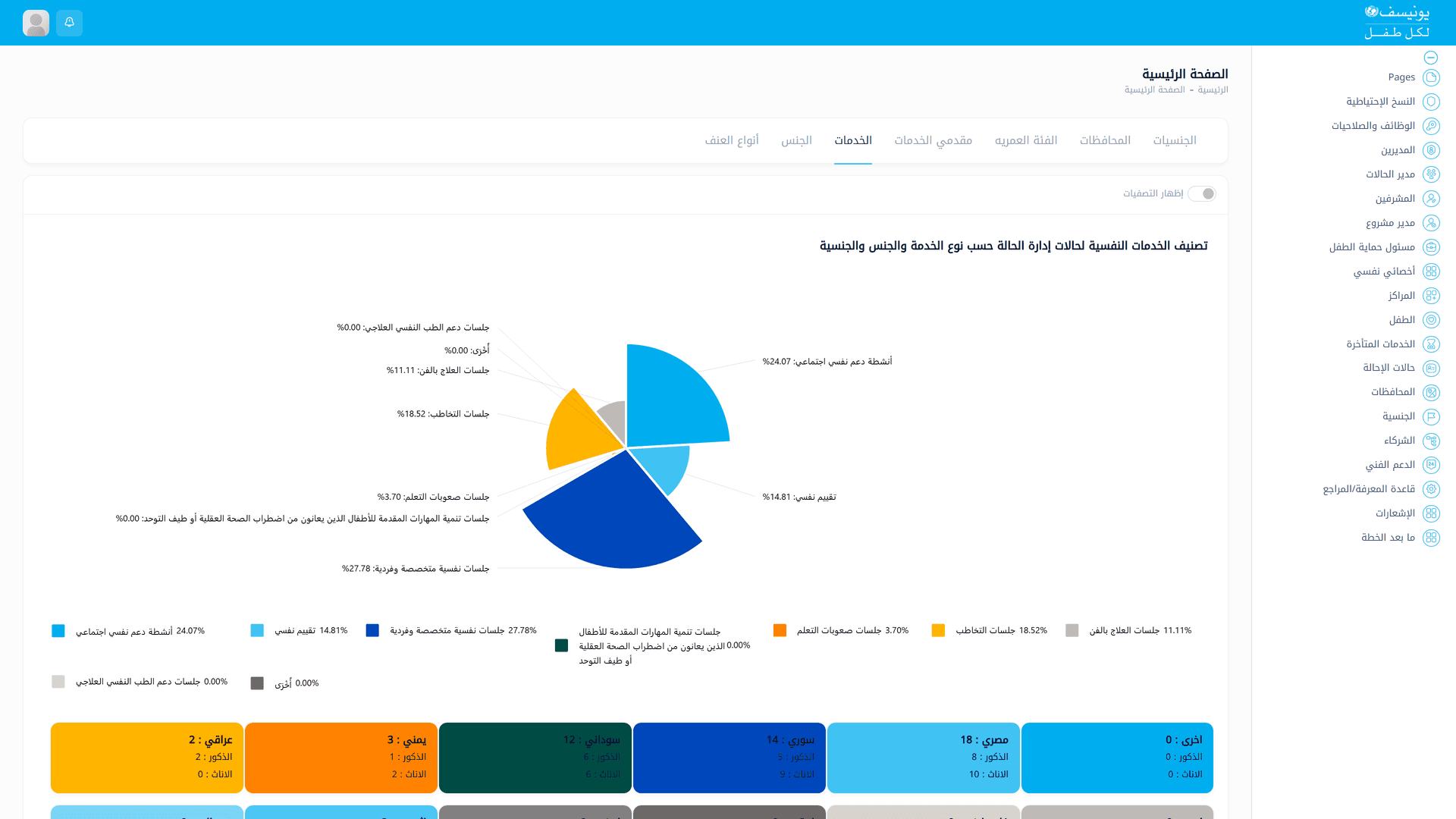
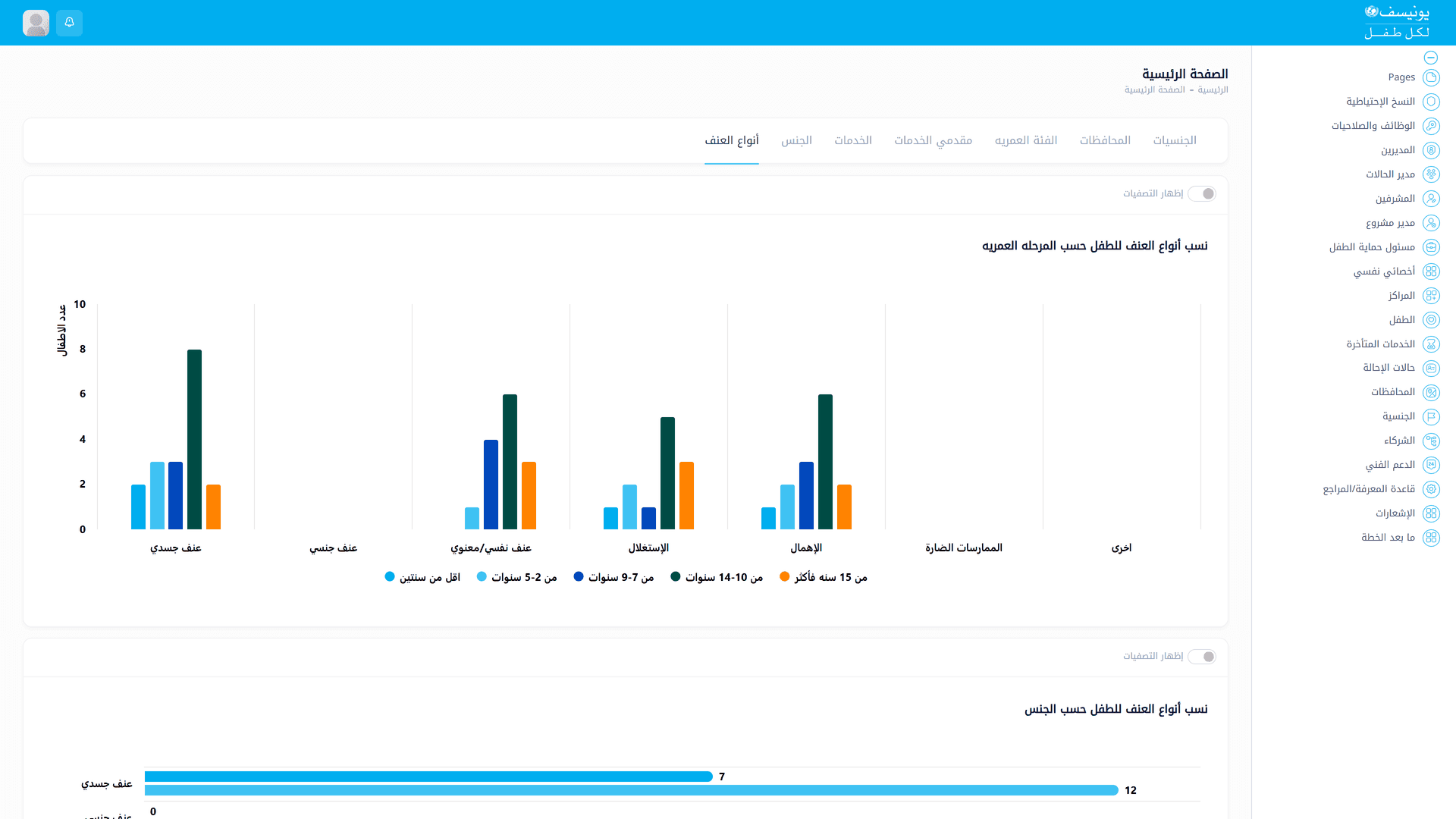
- Programme dashboard: Seven tabs of filterable charts: nationalities, governorates, age groups, service providers, services, gender and types of violence.
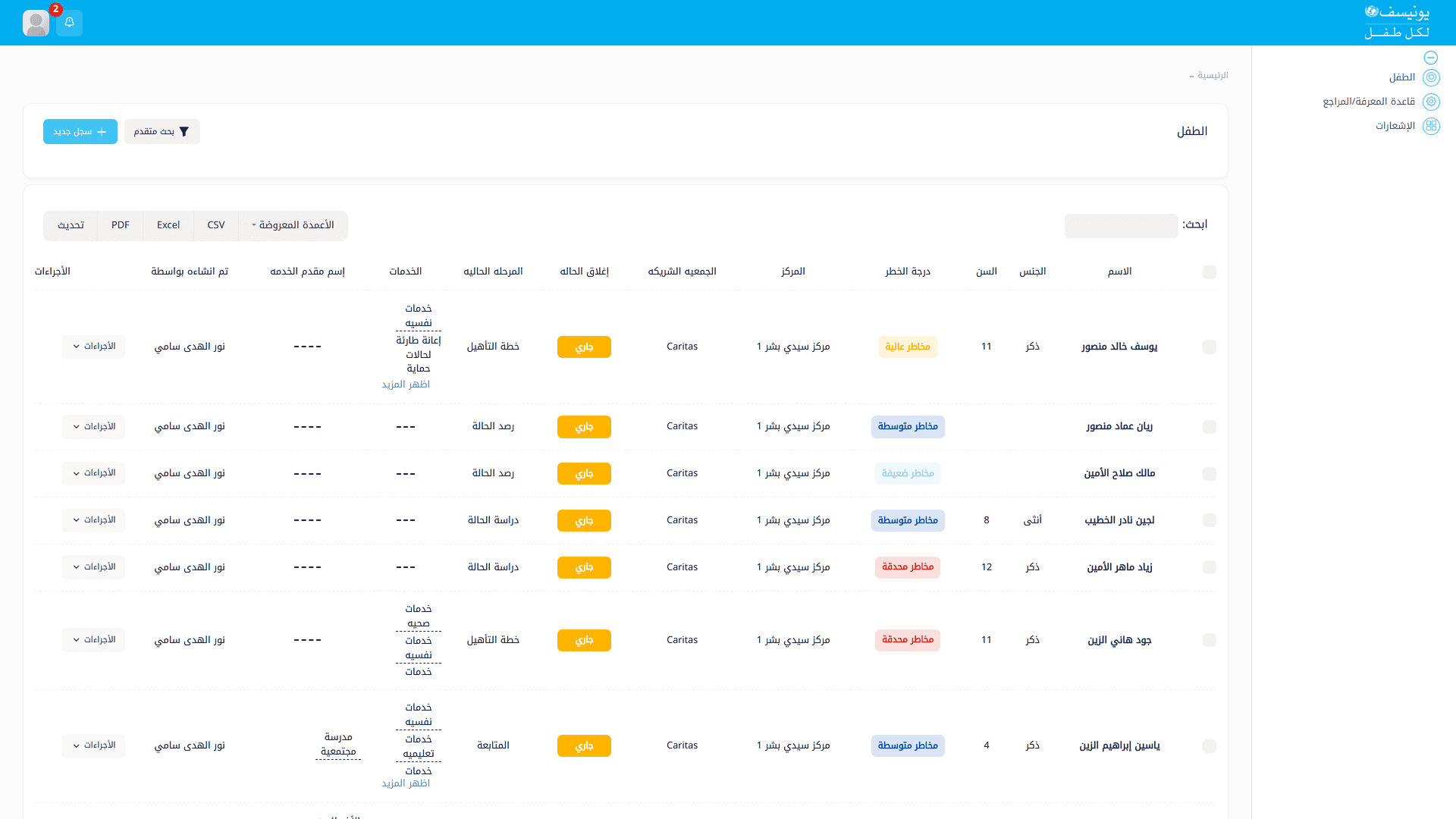
- Exports: Every table exports to CSV, Excel and PDF, with selectable columns.